Saturday, May 11, 2013

May Book Review

 
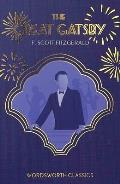
Great Gatsby Cover
The Great Gatsby

I hadn’t read F. Scott Fitzgerald’s classic “The Great Gatsby” since my teens. The book made a huge impression on me at the time, but I couldn’t remember why.

Now with a new movie adaptation out, with Leonardo DiCaprio in the title role, I thought it was time to revisit the story myself.

It took a little effort to squeeze into 1920s New York (especially after reading so much urban fantasy lately), but once I adjusted I could see the story unfolding like a beautiful but tragically short-lived flower.

The narrator Nick Carraway gets briefly and intensely swept up into the glittering fantasy that is his neighbor, Jay Gatsby. Gatsby is a man desperate to be worthy of the woman he loves but has only admired from afar for the past 5 years. What was a summer romance for her, turned into an obsession for him.

Rumors about how Gatsby obtained his wealth flow as freely as the champagne and cocktails at his weekly parties, though no one truly knows who he is or where he came from.

With a broad brush Fitzgerald paints a dazzling picture of a time between the two world wars and before the great depression. At times the image is a hazy watercolor of a hot summer afternoon, flowing into a painfully detailed drawing of characters on edge and choices looming large.

For me the imagery as well as the precise use of language held me in thrall to the story. I can honestly say that the book again made a deep impression on me. No doubt in a few years time I’ll want to read it again as its poignant themes of wanting to fit in and belong remain relevant no matter what time period you set it in. Maybe I’ll even go see the movie.

Sunday, April 28, 2013

Interview with Shawn Speakman


This month I have the pleasure of welcoming Author and Web Druid extraordinaire Shawn Speakman to talk about writing and publishing over coffee and apple pie.

Welcome.

1. Your first novel, The Dark Thorn, came out recently and is finding many fans. What was your inspiration for this urban fantasy - historic novel? I’ve only just started reading it but am already hooked. 
Happy to hear you are hooked already!  The inspiration behind The Dark Thorn is a crooked road, I’m afraid.  I have always been interested in faith and religion and how they don’t often equal one another.  When 9/11 happened, the world got an ugly look at the worst that religious extremism can offer.  I was heartsick from it.  But I was actually more shocked at the extremism that replied to the attack.  I heard Americans raging, Americans becoming just as extreme as those who attacked us.

I was fascinated by that ugliness.  Where did it come from?  Why?  Are we really better than the extremists?  Or are we just one side of history and we are right and everyone else is wrong?

That’s where the inspiration for The Dark Thorn came from.  What if the first religious Crusade was not against the Middle East but instead against very real fey creatures living in ancient Britain?  What if Henry II sent one of his sons to quell the fey?  And more importantly, how would those fey creatures respond over time?
2. Rather than walk the traditional path you’ve opted to start your own publishing company and publish your book(s) through that. What made you decide to do that and how has it worked out?
It was a tough decision.  The Dark Thorn was at two different NYC publishers when I was diagnosed with cancer in 2011.  I lacked health insurance and knew I was going to have a huge medical debt, one I would have to do something about.  Unfettered is that response, a fantasy anthology I am editing featuring some of the biggest names in the genre.  They came to my aid, donating stories so that the proceeds would go against that debt.

I realized though that Unfettered would garner a great deal of publicity, publicity I could put to work for me beyond just the anthology.  I took The Dark Thorn away from those NYC publishers and decided to publish both books on my own.  It has worked out better than I expected.  People are buying both books and The Dark Thorn has gotten great reviews.  Better yet, that debt is dwindling.  So a smart move in retrospect.

3. You also maintain the websites for at least 3 other authors, how does their work inspire you and what, if anything, have you learned about writing and publishing by working with them.
Working with Terry Brooks, Naomi Novik, and David Anthony Durham has been great fun.  I have learned something from each of them but Terry is driving force in my life.  We have been friends for thirteen years now.  His work has influenced me all of my life.  He has taken on the role of mentor in the last few years, guiding me like Lester del Rey used to guide him in the early days of his career.

Obviously, I have been a part of the publishing industry for a decade now and have learned more than I ever imagined I would about it.  But something fun has happened recently.  Since I have self-published The Dark Thorn and Unfettered, I am teaching my writer friends about the trials and tribulations of self-publishing.  It’s been fun because I feel like I am giving back in some way.

4. ebooks vs. traditional publishing?
Both.  They both have a place.  I knew when I went live with my own publishing press, Grim Oak Press, that I would do both ebooks and physical books.  They go hand in hand.  Right now, the industry is in flux, trying to find its balance again with the relatively new inclusion of ebooks.  That balance will be found and we’ll still have traditional publishing and ebooks.  The industry will look different but physical books aren’t going anywhere.  There are too many bibliophiles like myself who love them!

5. Pen & paper or a computer?
I’m a computer guy.  Always have been.  I can’t imagine writing a book with pen and paper.  I know several writers who do.  I’m just not built that way.  I type at a high word rate and I plan my books in advance—meaning I know exactly where I am going and I have the fingers to get me there!  Ha!

6. What do you think is the most important thing a writer can do, aside from write well, to increase their odds of a successful career?
Read.  Without a doubt.  Writing is important.  Finishing something more important.  But beyond that and getting adept at editing, reading is the most important thing.  Reading in the genre one is working in; reading outside of the genre.  Reading teaches a writer different ways of constructing a sentence, a paragraph, a story arc.  It really is the best way to learn and have a successful career.

I’m also fond of how Terry Brooks answers this question:  “Ten words: Read, read, read. Write, write, write. Repeat.”

7. What secret talent do you have, which everyone reading this blog will keep secret, and does it help in your writing?
I am bendy.  Quite bendy.  While that has its practical uses in the real world—I’ll try to keep this PG, kiddos—it also helps me do hot yoga.  I do hot yoga every other day as a stress reliever.  Sitting in a chair and typing for hours a day is harmful to your health.  Seriously.  It is great to take that bendiness I have and use it in a hot room with other sweaty people.  The stress just melts off and not having that stress the next day when I sit down to write can only help my chances of writing something good.

Thank you and happy writing!

Thanks!

Thursday, April 25, 2013

Imagination


“Our imagination flies -- we are its shadow on the earth.”
― Vladimir Nabokov

Imagination is the ability to see what isn’t there. For a writer that means creating whole worlds, populated with believable characters and their experiences, seemingly from thin air.

There is often something that sparks that imagination and gives it wings. It can be a casual conversation, a billboard, a flash of color out of the corner of your eye, or, as in the above picture, an interesting knot on a tree.

To me it looks like an owl. Not just any owl, a sentinel. A creature that comes alive after dark and guards some hidden passage to another realm. The creature is obviously otherworldly and only by using your imagination can you see that it’s not truly hidden in the daylight hours.

A picture like that can keep me thinking for some time about a possible story. I’ve not stretched into the fantasy realm yet, but that doesn’t mean I don’t enjoy giving my imagination free rein.

Every time I stretch my imagination it enhances my writing. It doesn't matter what I’m working on, it can be another Fountain pen story for the collection coming out this fall, or a book like “Out in the Dark”, or a satirical short story blending elements of Steampunk and SciFi into a future where women in hoop-skirts and petticoats race in their own spaceships alongside men in a race to be the first to fly around Jupiter’s moon, Europa.

I think Albert Einstein says it best: 
   
“Logic will get you from A to Z; imagination will get you everywhere.”
― Albert Einstein


Friday, April 5, 2013

March/April Book Review


A little late for March and a little early for April, but life’s been busy and reading has had to take a backseat in recent weeks, but I did manage to finish one book in my towering stack:
The Rook by Daniel O’Malley.
A thrilling debut novel.

Imagine waking up in the rain, on muddy ground in a London park surrounded by bodies all wearing latex gloves. You have no memory of what happened or even of who you are. A letter in your pocket explains in only the barest details who you are and what you should do next.

You make your way to a very comfortable hotel and assess the damage to the body you woke up in; it’s badly bruised and you have some serious black eyes.

Your options are to run away and hide, assuming an identity different from the one this body had, or continue on as Myfanwy Thomas, a highly placed administrative operative in an incredibly secret organization dedicated to protecting England, and the world, from the supernatural.

Myfanwy chooses to continue on, in part to learn who has tried to kill her. Along her journey of discovery we meet one personality inhabiting four bodies, a woman who can enter your dreams, children transformed into highly efficient fighters, and many more fantastical beings, as well as an old threat to the country reborn: laboratory created people with terrifying special abilities.

Myfanwy has to learn quickly who she was, and who she now wants to be, as well as how to effectively use her own awesome powers.

This novel has a very satisfying and suspenseful tale to tell and a very inventive cast of characters ranging from good to evil and the many shades in between. It seemed totally believable to me that such an organization as theirs would exist and I was hooked from the first page. Besides, somebody has to deal with all those vampires unleashed in recent publishing history.

No word yet on when a sequel might come out, though one has been planned and presumably is in the works. 

Monday, March 25, 2013

Traveling your character's road

Snoqualmie pass March 21, 2013

Out in the Dark

Nothing brings your imagination to life like traveling the same road as your protagonist, especially if conditions are somewhat similar.

Jake, a 17-year old, on a frantic road trip in search of his father who has been missing for a year and who recently started sharing mental images of what he’s experiencing as a prisoner of an off-the-books organization who want him to use his exceptional remote viewing skills for their aims.

Because his father taught him the same skills, Jake can see and feel what his father’s going through and it’s enough to make him decide he has to find his father before it’s too late. He ditches school, packs some essentials, lies to his mother and sneaks out in the middle of the night in his father’s prized 1966 Pontiac GTO, and drives across the Cascade mountain range. Snoqualmie pass can throw all sorts of weather at you, no matter what the calendar says, as you can see from the above picture.

This weekend I felt Jake’s fear, his desire to get across the pass and his urgency to reach his destination as I carefully drove up the snowy pass on I-90, retracing my character’s drive. Jake’s story now felt very real. Luckily I was spared the pain Jake felt. And unlike Jake, I avoided picking up a hitchhiking college-bound girl (the love interest in this paranormal Young Adult novel).

Below an excerpt from “Out in the Dark”. To read the whole book, please respectfully tap your favorite publisher and gently direct them to this page.

                                                                            *  *  *

... A painful image flashed across his mind. He could see his dad doubled over and could almost feel the kick he’d gotten to the gut. He willed himself to see more details, to see who was doing this to his father. It was hard to concentrate on the image and keep the car on the road, but he managed to get a glimpse of the other man.
    With a shock Jake slammed on the brakes. That wasn’t right, that was not how the military ran those psi experiments. Who were these people?
    Cold sweat poured down Jake’s back as he gripped the steering wheel and tried to control his breathing. He felt as if he had been punched in the gut like his dad. He was no longer even aware of the freeway, the car or the darkness, he only felt the pain his father felt and the betrayal, knowing that his father was being held against his will. Somehow, something had gone terribly wrong.
    Static crackled through a John Coltrane piece, sharply bringing Jake back to the present.
    “Oh, shit,” he said, realizing he had stopped in the middle of the freeway just on the other side of the rise. If a car came over the crest they would not be able to stop in time, and would probably swerve to avoid him, ending up in the trees.
    Still shaken Jake put his foot on the accelerator again. The car roared back into action and fishtailed for a moment with excess power. That’s what his dad would have called it. Nothing much fazed him. A combat veteran and an officer to boot, he could handle anything, of that Jake had always been sure, until tonight.
    Picking up speed to at least match the speed limit Jake continued his journey. He was too shaken to even think about going above the speed limit...

Monday, March 11, 2013

Terry Brooks Interview


This month I welcome NY Times Bestselling author Terry Brooks for an interview and some advice for fledgling writers.

Terry, welcome to my blog.
You’ve just finished writing 3 books in one year, which again made the bestseller lists, does that mean you get to take a break now?
No, now my publisher wants me to do it again!
I offered to write more than one book in a year for the 35th anniversary of the Shannara series since many fans clamored for it. The publisher said they would publish them in 6-month increments, March 2013, July at the San Diego Comicon 2013, and March 2014.  I may be old school, but I believe writers should be read, not seen.

I don’t write the really thick books anymore.  I lack the staying power required.  My new mantra is ‘Less is More’.

What do you think is the enduring appeal of the fantasy genre?
Fantasy storytelling creates a world that’s imaginary, but still relates to the human condition. It allows the reader to be taken out of their daily life, yet they can still connect with the characters and what they’re going through. My younger fans especially like stories where there’s a lot at stake.
Fantasy is the oldest form of story in all cultures. Just look at the mythical tales surrounding the ancient gods.

Is there something in your books that you’d like to see in real life? Or is there a place in your stories you wish you could visit other than in your imagination?
No.
My worlds belong to me and I share them through my writing. Although I would like to see more positive aspects of my stories in real life, not more negativity.

eBooks vs traditional publishing?
I’m doing ebooks now in the form of short stories as an acknowledgement that ebooks are here to stay. And of course many of my books are available in ebook format as well as paper.
It’s a venue and form foreign to me in my advancing years and I don’t like it much. But I can see their place in our world.
Personally, I prefer paper.  I like collecting signed copies of books and having my library.
My wife and my kids all have e-readers, but I don’t.

Pen & paper or a computer?
Computer
I have terrible handwriting, sometimes I can’t even read my own notes.
In either my junior or my senior year of high school my mother made me take a typing class. That proved to be a stroke of genius. I took to it and type at 120 words per minute, much faster than I could hand write.
I tend to think in rapid bursts, so writing by hand would be too slow.

My old editor at Del Ray believed that the computer ruined careers for many writers because they could put down a story so fast they didn’t take time to think about it. And writing requires you to think about it and go back over what you’ve written to make sure you’re not writing drivel. 

On a side note: The biggest change I’ve seen in publishing is the pressure to produce quickly and produce more. It used to be you were offered at least a year or more to write your next book. And an editor used to have time to train up a writer.
I’ve been lucky in that I’ve always had good editors who have taught me a lot.

What do you think is the most important thing a writer can do, aside from write well, to increase their odds of a successful career?
Have passion for your work. If you don’t love what you do, don’t do it.
As my wife, Judine, likes to say: “You’re either born to do it, or you’re not.”
Writing, if it is your true passion, gives you an outlet necessary to be a complete person. You’d write even if you didn’t get paid for it. I know, that’s easy to say from where I’m sitting, but it’s true.

I recall in the early days of my writing career I attended a conference and my publisher invited me to a lunch with several other authors and editors and he asked another newly published writer and myself this question: “What’s your goal for your writing?”
I said I’d like to keep writing for the rest of my life and if I could make a living off it, that would be great. The other author started listing all the awards he wanted to win. Now, 35 years down the line, the other author is no longer publishing. He wrote maybe seven books and that was it.

And of course, self-promotion. As you know, you have to be out there and actively connect with your audience.

What secret talent do you have, which everyone reading this blog will promise to keep secret, and does it help you in your writing?
I’m a very good editor. I have learned to be a good editor over the years. The manuscripts I send in now are very clean.

A few last words:
You are your own last line of defense. Don’t expect anyone else to do something you should have done yourself. Check everything, especially the galley proofs.

I recall one book in particular, the protagonist lost an arm early on and I was involved with the cover design. Then the book came out and I looked at the cover, thinking, “that’s a really beautiful cover”. And it hit me .... The wrong arm was missing!  By then, of course, it was too late to fix it.

Micro manage your professional life, get to have input on all aspects, from the cover to the book tours. Don’t be pushy about it, but do speak up for yourself.

Make sure you feel like you’re being listened to. After all, it is your name on the cover of the book.

Terry, thank you for taking time away from writing to talk with me today.
My pleasure, Lynn.

In stores March 12, 2013

Saturday, March 9, 2013

Using Swearwords

Theodore is easily shocked, poor thing. 
Every language has its collection of swearwords, grown from colloquial, and often harmless, usages to modern day punch-packing little bombs. And they can be quite useful in both speech and writing, especially when applied judiciously.

When confronted with an erratic driver in France it helps to make you feel like you’re blending in by shouting the right swearwords out the open window, like you see the other drivers doing.

In The Netherlands it helps if you know the level of swearword hurled at you so you can determine if a response is warranted ... or safe. The Dutch seem to have more words and greater nuances than other languages I’ve found so far in my, far from empirical, observations of swearing.

In American English I’ve discovered there are only a few words that get to do all the work and it required some initial observation, all those years back, to understand the context in which they are used.

For some users the F-word is every other word in every sentence they speak, which reduces the value or weight of that word. On the other hand, if I were to employ it - so counter to my soft-spoken manner - you’d know I was truly ticked off.

I think the same applies in writing; judicious use of swearwords can have a significant impact within the story without detracting from the actual thread of the story.