Monday, December 23, 2013

Big Ideas


A few weeks ago I once again jumped into the deep end.
I signed on as a volunteer for a regional FLL competition. My assignment: Project Judge!

After donning my volunteer T-shirt I met up with the other judges to receive my instructions. A room full of enthusiastic volunteers, mostly engineers, all willing to give up their weekend in support of science, technology, engineering and math learning for kids. Oh, and fun with Legos of course. FLL and jrFLL use the Lego Mindstorm robotics.

I teamed up with two other judges and we went into the assigned classroom (my offspring’s high school hosted the competition and the robotics team kids volunteered set up, running, and clean up) to rearrange the desks the way we thought best. Then we tested our seats, decided we needed coffee and water, as well as pens, to look professional. We studied our rubric sheets and decided who would write what portion.

Each team would have 5 minutes to present followed by 5 minutes of Q&A. After they’d left, we, the judges, would have 5 minutes to score the rubric for that team. No time for goofing off or deep discussion, we were on a tight schedule. There were 40 teams competing each day that weekend.

A quick overview: in FLL the teams are given a challenge for the Mindstorm robot they build and that one will be judged on how well it does in competition. It will also be judged on mechanical and programing aspects in a separate judging. Then there is the challenge of creating a presentation that solves a problem in relation to this year’s challenge, which was Nature’s Fury.

As project judges we got to see these presentations. A few teams had barely prepared, some presented their solution as an acted-out skit, and others still, were very prepared and showed us prototypes of their solution to a problem that might arise during or after a natural disaster.

After the third team left the room I felt much more comfortable in my role as judge. I also realized something very important ... These kids almost all had phenomenal ideas. Some went so far as to price out what their solution would cost and how it could be implemented. The writer in me sat back and soaked up the imagination, letting it spark mine. Will I ever use any of the ideas I heard there? Maybe, maybe not, but the main thing is, it sent my thoughts off in different directions. It allowed me to think more creatively and consider subjects from different angles. It also made me realize how important it is that there are books out there that hold the attention of these kids as they grow up.

I’d love to share some of the ideas these kids came up with, but as they might go on to compete in the state championship I think I should keep it quiet for now.

Sunday, December 15, 2013

December Book Review

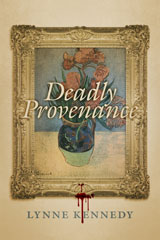
                                                Deadly Provenance

Deadly Provenance
By: Lynne Kennedy

After interviewing Lynne Kennedy and learning more about her book ‘Deadly Provenance’, I decided I really wanted to read it. A mystery, a Van Gogh, and history... just the thing to read in the dreary days of early December.

A quick click at Amazon and the book was downloaded into my E-Reader.

I was not disappointed. From the first page I had trouble putting it down. Every free moment of my busy weeks I would pick up the reader and dive back into the story. Each time getting sucked deeper into the search for the missing Van Gogh, the history of the massive and systematic confiscation of art by the Nazis, and the (private and professional) challenges of the main character; a spunky redheaded professor of digital photography and forensics. Of course I adored her dog, Rosie, too, modeled after the writer’s own yellow labrador.

The historical segments blend seamlessly into the fiction. The writer’s passion for history is very clear in the details she puts in without cluttering up the story.

Her descriptions of Paris made me feel like I was there on the terrace having a coffee and watching Parisian life go by in all its chaotic glory. Her use of occasional French in the story seemed completely appropriate. I know there are people who have trouble with authors who do that, but even if you don’t know the language, you can extrapolate the meaning from the story.

I found the main characters very warm and human, and the thrill of the chase like those you would find in any satisfying detective story.

I look forward to more by this author! Do keep an eye on her blog where she chronicles her ongoing search for that missing Van Gogh painting. It would be wonderful if it was found again.

Monday, December 2, 2013

November/December interview with Lynne Kennedy

                                          Lynne Kennedy 
Blog interview with Lynne Kennedy

This month I welcome author Lynne Kennedy who deftly combines fiction, history and science to create gripping mysteries. Her latest is “Deadly Provenance” about a Van Gogh painting that’s been missing since it was taken by the Nazis in WWII. I have eagerly started reading the book, curious to find out where this author will take me during the dreary and dark December days.

Lynne, welcome.

1. You write fiction yet use real life mysteries, or unsolved crimes, as the jumping off point and then you apply a healthy dose of science to solving the mystery. It’s a neat concept, how did you come to it?

For almost thirty years I was a science museum director, so science is my life. I particularly loved our programs and exhibitions on forensics and loved working with the police department to solve mysteries with modern forensic technology. 

History is my second love so naturally I looked for a way to blend the two in my writing.  The first book I wrote was “Time Exposure,” a mystery which revolves around Civil War photography.  The idea happened by chance.  The Smithsonian was in San Diego presenting programs at the various museums. We sponsored two talks at our science center.  One on space science and the other, ironically, on Civil War photography.  I sat in on the second one and was hooked.  I knew I wanted to write about Civil War photography.

But how would I blend this with modern forensics?   Through digital photography.  It really worked.  My modern character, a digital photographer, stumbles upon a mystery through a Civil War photograph.  Through her analysis, she comes up with the killer.  Well, something like that.

2. Your latest book “Deadly Provenance” deals with a beautiful Van Gogh painting, missing since WWII. How did you even find out about its original existence? And where has your search led you so far?

Besides the Civil War, World War II has always fascinated me.  Years ago, I saw a movie called “The Train” with Burt Lancaster.  It made me start thinking about the Nazi confiscation of art.  I started reading up on the subject and found a book (and later a movie) called “The Rape of Europa.”  I was astounded to learn the extent of the looting that was done at the time.  I knew this was going to be a book.

As I kept researching, I found a number of paintings that were still missing, one of which is Vincent Van Gogh’s Vase With Oleanders.  Since he’s one of my favorite painters, I decided to check further and found this amazing story of what had happened to it. 

I wrote “Deadly Provenance” and came up with a fictional ending to the painting.  But now I wanted to find the real painting.  You can read about my “hunt” on my web page: http://lynnekennedymysteries.com/the-hunt-for-the-missing-van-gogh/ 

By the way, I’m still looking!  Got quite a bit of publicity on it too.  This is a KPBS radio interview several months ago: http://www.kpbs.org/news/2013/sep/04/san-diego-writer-mission-find-missing-van-gogh/

I was even featured on the front page of the San Diego Union Tribune: http://www.utsandiego.com/news/2013/sep/05/where-missing-van-gogh/

What’s amazing is that Nazi stolen art works keep appearing in the news today.  History never ends. 

3. How do you start one of your books? Do you have an idea of where it will go before you even start your research?

My last weekly blog is on this subject exactly.  It’s about jump-starting your book.  Rather than repeat, here it is. http://lynnekennedymysteries.com/2013/11/25/jump-start-your-book-2/


4. What has your journey to publication been like and why did you choose self-publishing, as so many are doing these days? 

I landed an agent for my first book but she was not able to get a publisher interested.  The general response was: great writing, characters, etc, but too complicated a story to market.  Right.  So I tried with my second and third books, but, frankly the response was the same.  Marketing was always the issue.  Is this a mystery?  An historical mystery?  What?  The two storylines threw them into a tizzy.  You’d think they’d be excited to have something different.  So I decided to self-publish. I’m not sorry, but learning how to do it correctly was a real struggle.  So I wrote a blog about this in two parts.  The first part is “Self-Publishing: Dream or Nightmare.”  Kind of says it all.  Here’s the link: http://lynnekennedymysteries.com/2012/09/04/self-publishing-dream-or-nightmare/

The second part is “The Good, The Bad and The Real Ugly:”
http://lynnekennedymysteries.com/2012/09/11/self-publishing-part-2-the-good-the-bad-and-the-real-ugly/

5. eBook vs Traditional?

This was a no-brainer.  I wanted to hold my precious books in my hands so I had to do a traditional, albeit, paperback version.  E-Books were the wave of the future (still are) so of course, I produced that version too.  Now I’m a real e-book fan.  I rarely buy hard or paperbacks anymore.  Sad in a way. 

6. Pen & Paper or a computer?

Always the computer, although, occasionally, when I’m out having a Starbuck’s or something will jot down notes with a pen and scrap of paper.  I make too many changes to not be able to delete!

7. What do you think is the most important thing a writer can do, aside from write well, to increase their odds of a successful career?

Read, read, read. Re-write, re-write, re-write.  Find a fabulous critique group and do it all over again.  Basically, the first step is to write the best book you can.  Then, whether you self-publish or publish traditionally, you will have to learn the marketing business.  Social Media is key, but other marketing avenues are necessary too.  Wrote another blog on that, ha! The point is not to let marketing take over your writing life: http://lynnekennedymysteries.com/2013/10/15/writing-vs-marketing/


8. What secret talent do you have, which everyone reading this blog will keep secret? Or, what’s the craziest thing you’ve done in the name of research?

Oh, if I had a secret talent, it’s hidden from me too.  Or have something crazy I did in the name of research.  Nah, I’m just persistent.  I try to find answers to fill in the details of my stories.  What kind of dress would my character have worn in 1911, if she only had $2 to spend?  What sort of camera would a Nazi photographer use in 1942?  What kind of foods would be on the table of a rich patron during the Civil War?  Those are the details I love to ferret out, and hopefully, my readers enjoy!

Thank you, and I look forward to your next mystery!

Monday, November 25, 2013

Big Words


Spellchecker is my best friend. I know it shouldn’t be, but wait till you hear my reasons. It’s not so much for finding those misspelled words, it’s more for weeding out the long words that are not supposed to be long in English.

I came up against this recently while working on a translation job and it got me thinking about language again. In Dutch, and also German, there are words that are stitched together to make one long word explaining exactly what it is you're dealing with. They show that together these words perform a function that they otherwise would not as independent words.

Let me give you a simple example.

kitchen + table would logically make ‘kitchentable’ but not in English. It works in Dutch and indicates that there is absolutely no ambiguity about the purpose or place of that table. In English they stay separate, I suppose in case you want to use the table somewhere else.

High+school+ student another one which in Dutch would be one word, such as “havostudent” (havo indicates the level of high school but that’s a different story). In English it’s 3 words. You may not smush them together into one nice long word that tells you exactly what you’re dealing with... not that we ever truly know what we’re dealing with when it comes to high school age.

So this is where spellchecker saves me every time I build long words in the Dutch tradition that don’t exist in English. Although sometimes we can use a hyphen to indicate that two words belong together, such as a "long-haired cat", it’s still not the same as actually making a satisfyingly long word.  A friend with considerable experience in the English language recently told me hyphens are on a fast track to extinction.

It’s a bit like a puzzle, I suppose, taking words and making new ones by adding or taking away other words to change meanings and uses of words. But then again in English, at least American English, we take that in a different direction by turning words and expressions into quick and easy acronyms, such as LOL and ROFL. This makes for a different kind of puzzle and a new kind of shorthand that's supposed to make communications faster. And that is the way language evolves and grows, it is after all a living thing that through daily usage changes and develops.

I’m learning to adapt, though, I will confess, it took me a full 10 minutes to figure out the response to a simple question, which I thought was short and to the point, I texted my offspring recently:
ME: “Do you have math homework?”
HE: “idk”

Sunday, November 17, 2013

November Book Review

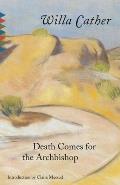
                                                                  Death Comes for the Archbishop (Vintage Classics) Cover

Death comes for the Archbishop
By: Willa Cather       

A classic and a book often included in top 100 book lists. Certainly a book that stuck with me, as much for the storytelling as the beautiful writing. It’s descriptive without being flowery or cluttered, but gives just enough to leave you with a rich impression of time and place. Almost like ‘reading’ a large watercolor tableau.

Willa Cather was a very insightful and intelligent author with great understanding of human nature. In 1927 when she wrote this she was able to evoke the time in the 1850s when her characters lived with uncanny detail. 

The story is that of two childhood friends from France, one driven by his faith and the other by his devotion to his friend (to the exclusion of all else), who enter the Catholic church and become missionaries to the new territories on the North American continent, New Mexico in particular. Both must endure considerable hardships in terms of the climate, the terrain they travel - often by mule - and the characters they encounter.

The beauty of the book is that it captures not only what these two outsiders are feeling but also the growing pains of a country as it’s being settled. It shows lives lived quietly and simply; often making due with very little as they travel around and spread the word to people too busy surviving in a harsh land to understand it. But through their kindness and faith they bring a new richness - however subtle - to the people.

The one with his unshakable faith makes greater progress in the church and eventually builds a church and becomes archbishop, whereas his friend is content to be a parish priest, Father Joseph. His faith grows as he struggles against the land, the people and his own demons, but always finding solace and strength in his friendship.

It’s a quiet book which is surprisingly hard to put down. Though the action is not what we have come to expect from our entertainment today, it is fitting with the lives these two men lived, from boyhood through the adult years, to the end. It’s a love letter to the American Southwest, and a deep exploration of friendship.

Sunday, November 10, 2013

Another interview with me

Building a career involves talking to people and Dianne Lynn Gardner, fellow writer, was a pleasure to talk to. Below find the link to her interview with me. You may recognize her from an interview I did over the summer. The Seattle area is rich in authors and stories!

Enjoy!

http://iansrealandmore.blogspot.com/2013/11/tale-from-fountain-pen-historical.html

Tale from the Fountain Pen a historical novella written by Lynn Hooghiemstra

A few months ago a lady from Seattle offered to do an interview for me, and to feature my book on her blog. Authors are always interviewing one another but this lady went the extra mile. Several in fact. She took the Washington State ferry over to Bremerton where I met her and we sat and chatted at a local Starbucks. Today I have the extreme pleasure of reciprocating that gesture and interviewing Lynn and her new novella
 

Tuesday, November 5, 2013

Talking it Over


This weekend I had the pleasure of meeting up with my publisher, Jay Hartman from Untreed Reads, and talking writing and stories for well over 2 hours. Nothing like a quiet corner in a Starbucks to tease out the intricacies of the publishing and writing business.

We talked at length about the challenges of getting ‘eyes on the page’ with so many E-Books and paper books out there. How do you differentiate and how do you get your name out there? Or, better yet, how do you build the brand that is you?

Truly that is what it’s about these days. Of course good writing and storytelling is ultimately what will help you go the distance, but there is a need to find that niche and connect with readers.

I’ve been thinking back to the marketing and business books written by the guru Peter Drucker that I had to read in college, but sadly not much of that information is still available in my long term memory vaults. My creative brain tends to focus on other things than marketing. And let’s face it, even as recent as 20 years ago an author didn’t have to market their book to nearly the extent they do now; a publisher would see to that.

From that topic we moved on to the book I’m currently working on. I have been struggling with the format and Jay, without reading the rough draft, suggested that perhaps it was not a good format as the main story is strong enough and possibly epic enough to stand on its own.

I had been wondering if perhaps I was writing two different books in one. Or if I was possibly typecasting myself by trying to blend 1940 and 2013 into one book. But then again, if I do it right, it might become my trademark.

The ‘magic’ element, as Jay calls it, works for Tales from the Fountain Pen, but might not work as well for a different book. Even if done differently it might still become gimmicky and stall a career. 

As I’ve said before, much as we think of ourselves as lone creators writing away in our little writing garrets, it is very much a collaborative effort.

I’ve sent the, rough, first 6 chapters to a few beta-readers and I’d like to find a few more. If nobody comes forward in the comment section, then perhaps I’ll post the first two chapters here for comment sometime in the coming weeks.