Friday, June 28, 2013

Dianne Lynn Gardner Interview


On a beautifully cloudy day, like you only find in the Pacific Northwest, I gathered up my notebook, bus pass and a copy of Dianne Lynn Gardner’s book Deception Peak, and took an hour-long ferry ride across Puget Sound to meet with this remarkable author and artist. We picked each other out at the Ferry Terminal without a problem and set off for a nearby Starbucks to talk about writing.

Welcome, thanks for meeting me today to talk about your work.

1. What was the inspiration for the Ian’s Realm Saga? I’ve just started reading the first book, Deception Peak, and am enjoying the adventure. As readers of my blog will know I have a weakness for dragons.

I really wanted to write a book for boys. I always loved the adventure books like Tom Sawyer, Alice in Wonderland, and others like it. I wanted to write something in the fantasy genre, with adventure, troubles, etc. I have 9 grandsons and sadly they don’t read a lot of books as there just aren’t that many good YA books out there for boys.

I also wanted an excuse to paint a dragon. I painted a large panel of the dragon then added two more, one on either side. Each panel shows the cover of each book in the trilogy. The entire painting measure 9 ft by 4 ft.


While painting the dragon the story and Ian came into my head. The books grew from there. 


2. You have an uncanny ability to get into the skin of a teenager. How do you do it?

Maybe I never grew up. I love teenagers and I have teenage grandchildren, 9 of them are boys.
I can get into boys heads. Some part of me is a tomboy. I feel a deep compassion for young boys. I can see that struggle in them of the boy wanting to be a man, but not being quite ready yet. Their task is to prove to themselves and to the world they’re learning. It’s a struggle.


3. You are also an accomplished and award-winning visual artist, how does one feed the other and vice versa?

I studied art longer than writing. Art taught me about ‘seeing’
daVinci said: Art is knowing how to see.
So in my writing I can explain things with an artist’s eye. It adds a layer of richness, I think.


4. Your books are available through a small independent publisher, Hydra Publications, what has your experience been working with them?

Hydra has been great. It’s almost impossible for a new author to get into a big publisher. Since I’m in my 60s I didn’t want to wait another 10 years to get a book published. I also didn’t want to self-publish as that does still have a bit of a stigma attached to it. With a publisher, and an editor, you get validation that someone is backing your work.
It’s been a very positive experience working with Hydra and they published 4 of my short stories and 3 of my books.


And now a few of my standard questions that are designed to help other writers and give an insight into the business. 

5. ebooks vs. traditional publishing?

Ebook is the best way to start these days. If you wait to be picked up by a traditional publisher you’ll find it can take a long time. Epublishing offers a great way to hone your craft while building an audience.

6. Pen & paper or a computer?

Computer, but I always start with pen and paper to draw a map of the story or book since I’m a visual person. The only time I hand write is in the car if I have a thought I want to keep (obviously not while driving).

7. What do you think is the most important thing a writer can do, aside from write well, to increase their odds of a successful career?

Blog, use social media, get the word out. Have an online presence. I had a blog before I even began writing. On there I started blogging about wanting to write and how that process developed.

Blog: http://dragontargeseries.blogspot.com/
Website: http://gardnersart.com 
Facebook  https://www.facebook.com/TheIansRealmSaga?ref=ts&fref=ts
Twitter https://twitter.com/DianneGardner


8. What secret talent do you have, which everyone reading this blog will keep secret, and does it help in your writing? Or what is the craziest thing you’ve done in the name of research for a book or artwork?

I’ll take the second part of that question:
Research:
- I learned all about yurts and blogged about it from my friends who do historical reenactments.
- Explored a mile-long lava tube near Mt. Saint Helens which would make a perfect dragon’s lair.
- Had the opportunity to sail on the Lady Washington which gave me a lot of information.


Thank you and happy writing! Now I’d better go catch my ferry back before the weather gets bad.

I've included one of Dianne's book trailers below. Enjoy!
Dragon Shield Trailer http://www.youtube.com/watch?v=_c2rm6mGBrM


Thursday, June 20, 2013

Guilty Pleasures


I know what you’re thinking, guilty pleasures must mean sex, drugs and rock & roll, or at the very least chocolate. But you’re wrong. For me a guilty pleasure is reading old superhero comic books.

Yep, Superman, Batman and the Justice League. Preferably from the 1940s and 1950s and some from the early 1960, with an occasional one from the early 1990s.

I do branch out into the Martian Manhunter, the Flash and others as well, but Superman and Batman were the first, and a girl never forgets her first.

For me they continue to provide a cultural history lesson into this country I choose to live in. The early stories of both Superman and Batman were started in the 1930s at a time of great economic uncertainty and much social injustice, not just in the US but across the world. The rise of Nazi Germany created another opportunity for superheroes to flex their superhuman muscles to protect the innocent and the downtrodden.

Throughout the stories you can see the progression of ills befalling society that require clean up. The old stories so clearly illustrate the desire of young men (they wrote and drew these stories and also read them) to believe that there might be someone out there, a little different, a little stronger (okay, a lot stronger), and with unshakable moral convictions of what was right and wrong, who could make their lives better.

For example it’s been speculated that one of Superman’s powers, the fact that bullets can’t hurt him, was put into the story because one of the creators of the hero lost his father to gun violence. (Superman was created by writer Jerry Siegel and artist Joe Shuster, high school students living in Cleveland, Ohio, in 1933.)

But the actual super powers are less of what draws me to the stories. The earlier stories show me a country in turmoil trying to find its identity in a world teetering on a precarious cusp between good and evil. The stories, as they progress, show me how America found its place in the world, for better or worse. From almost cowering isolationism, to -initially reluctant - hero of WWII, to ebullient economic super-power. With the launch of the space program stories joined in and added more threats from outer space.  I’ve not read many of the more recent comic books as the extremely exaggerated muscles and profusion of blood and gore are a bit of a turn off, and a distraction to the story for me.

The recent movie trilogy of Iron Man has made me curious about the progression of his story, so I shall delve into those starting at the beginning. Time permitting of course.

Of course, reading these books is also a great way to stay connected with my offspring.

Monday, June 10, 2013

June Book Review

Inferno: A Novel Cover

Inferno by Dan Brown
(spoiler in the last paragraph)

I wanted to like this book, I really did, because I enjoy puzzles and mysteries and the symbolism found in Renaissance Italy. The idea of traipsing through Florence and seeing some great art and architecture along the way should have been icing on the cake.

This cake however was underdone and overdecorated.

The pace of the story, a basic race against time, kept getting slowed down by the endless, detailed explanations of every bit of artwork, building and mosaic the narrator passed by.

In addition there is considerable repetition of information, as if the reader won’t remember what was said only a short chapter or two before. It reminds me of the admonishment brandished by my favorite writing teacher, “Don’t underestimate the intelligence of your reader. Don’t explain what should be obvious from the previous sentence.”

Ultimately the book feels more like a long lecture on the dangers of overpopulation with endless history and art-history lectures woven in. It feels like maybe it should have been two separate books. Two very different, separate books.

I was left with the impression that perhaps Mr. Brown feels some considerable sympathy for the actions of his antagonist ... to randomly sterilize one third of the world population to eliminate future population growth. I suppose in that sense the book succeeded in that it made me think about the perils of population growth that face our fragile planet. 

Monday, May 27, 2013

Craig Orback Interview


This month I welcome award-winning illustrator, and my former neighbor, Craig Orback, for apple pie and a chat about illustrating.
   My Photo 

1. Welcome Craig. Your illustrating career is going quite well, are you at a point yet where you can choose projects?
I don’t really get to choose, often it’s an assignment and there’s little choosing. I do on occasion turn down a project because I’m too busy with other projects or if I really don’t like the story, but I rarely do that. I don’t want to disappoint anyone.
This illustrator rarely gets to choose projects.

2. How does an illustrator work with an author? Can you walk me through the process and how involved are writers with the illustrations? 
For picture books the publishers tend to keep the author and illustrator separate. An illustrator works with the publisher’s art director who will show initial sketches to the author. But the illustrator must be free to come up with their own ideas.

3. You’re currently involved with a rather unique project, can you tell me some more about that.
The project is called “Gifts from the Enemy” and is an exciting nonfiction picture book project that I have been working on with bestselling author Trudy Ludwig. Trudy's inspiration for “Gifts from the Enemy” is Alter Wiener, a teen survivor of five prison labor camps during WW II and the author of "From a Name to a Number".

“Gifts from the Enemy” is carefully crafted to educate young readers in an age-appropriate way about the dangers of hatred, stereotyping, and prejudice. It’s also a story of hope for anyone who has ever been devalued or treated poorly by others—not for what they’ve done but simply for being who they are. The cool thing about this children's book is that it also includes a brief history overview, vocabulary, discussion questions, AND activities to promote social justice and kindness in kids!

Trudy found me through an extensive search of the SCBWI Northwest site. She wanted just the right illustrator and someone in either Oregon or Washington who might be able to travel to Portland to meet with her and Alter in person.

I had previously illustrated a Holocaust picture book called “Keeping the Promise”, about ten years ago, and I always wanted to do more. I have an interest in WWII and I also felt I could do a better job now that I have more skills and experience.

Trudy gave me the story and after I read it I had my agent negotiate the contract. By January we were set to go and by March I had the story board, sketches and a working layout. I worked closely with the designer at the publishing company to determine the layout.


I did lots of research, online, at libraries and from the author’s notes before she wrote the picture book.

I had a month to paint two larger paintings for the Kickstart Campaign to fund the production of the book. For that I had to find a model who could stand in for a young Alter. No pictures of his youth have survived the war.

4. How do you manage to get your people to look so realistic and detailed?
 I like working with live models. I’ll put the word out on the SCBWI blogs when I need a certain type or look and then I take lots of pictures to work from. For my most recent project “Boys Camp” I took lots of pictures of different boys involved in outdoor activities. It gets pretty chaotic at times.

5. ebooks vs. traditional publishing? How has the growth of ebooks changed how you work?
Ebooks haven’t changed my work at all. If a publisher wants to do an ebook of a book I’ve illustrated they simply buy the digital rights.

6. Paints & a brush, or a computer?
I work traditionally. Most of my work is in oil paints or acrylics but I do use Photoshop to tweak things. Often I have to give digital files so I scan in my work and adjust things like contrast in Photoshop before I send them off. 

7. What do you think is the most important thing an illustrator can do to increase their odds of a successful career?
I started out on my own for the first few years and had some success. What really helped me was going to New York to show my portfolio to publishers and leave samples. I go back every few years.
Getting involved with SCBWI helped me learn about the business and the craft, especially at the conferences.
Having an agent helps once you're busy working. An agent can keep you in front of publishers and bring you new assignments.
Also, read your contacts carefully, meet your deadlines and be open to changes.

8. What secret talent do you have, which everyone reading this blog will keep secret, and does it help in your art? Or what is the craziest thing you’ve ever done as research?
I think I’ll take the second question. The craziest thing I’ve done is have my wife wrap me in toilet paper to make me look like a mummy. She took many pictures!


Thanks for stopping by, Craig, and good luck with your current project!

Monday, May 20, 2013

Mile-High Library


Or The Airport Book Rack

Recently I had the pleasure of traveling by air again. Granted, it’s not the pleasure it once was, but I still enjoyed it. Except for one thing.

A serious bout of nostalgia hit me when I passed the shop with newspapers and magazines ... and the revolving rack of books. Those cheap paperbacks that can be crammed into a small corner of an already over-full carry-on bag.

I realized that this was the first time I actually walked right past the book rack. An e-reader crammed with books to read had taken the place of the paperback. It’s sleek and handy. If I really want to I can take at least ten different books with me, from a trashy novel to the latest bestseller to an old classic. I can even load a 1000-page James Michener or Neal Stephenson tome, if I so choose, without risking running afoul of the weight limitations for luggage, or what my shoulder can carry.

Why was I so nostalgic for a simple, cheap paperback? Well, I’ll tell you. Many years ago (no not that many, I'm still young) I traveled far more than I do now, and would cross from Europe to the US and back with some regularity. I would always stop off and buy a paperback to read on the plane, especially if the movie listed didn’t appeal to me. This was before in-seat entertainment as you find on long international flights today.

I’d often pick something easy to read, but entertaining, knowing I would leave it in the seat pocket in front of me once I reached my destination, where it could be found by a future traveler. It seemed to be an unwritten rule of travel to leave a book on the plane once read, and I’ve found my share of fun books on my travels that way. A sort of mile-high library.

I doubt anyone will leave a Kindle stuffed in a seat pocket, and I’m happy with my e-reader, but nostalgia is inescapable... although ... the imagination stirs and who knows what kind of golden story I can spin out of this straw.

Saturday, May 11, 2013

May Book Review

 
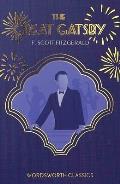
Great Gatsby Cover
The Great Gatsby

I hadn’t read F. Scott Fitzgerald’s classic “The Great Gatsby” since my teens. The book made a huge impression on me at the time, but I couldn’t remember why.

Now with a new movie adaptation out, with Leonardo DiCaprio in the title role, I thought it was time to revisit the story myself.

It took a little effort to squeeze into 1920s New York (especially after reading so much urban fantasy lately), but once I adjusted I could see the story unfolding like a beautiful but tragically short-lived flower.

The narrator Nick Carraway gets briefly and intensely swept up into the glittering fantasy that is his neighbor, Jay Gatsby. Gatsby is a man desperate to be worthy of the woman he loves but has only admired from afar for the past 5 years. What was a summer romance for her, turned into an obsession for him.

Rumors about how Gatsby obtained his wealth flow as freely as the champagne and cocktails at his weekly parties, though no one truly knows who he is or where he came from.

With a broad brush Fitzgerald paints a dazzling picture of a time between the two world wars and before the great depression. At times the image is a hazy watercolor of a hot summer afternoon, flowing into a painfully detailed drawing of characters on edge and choices looming large.

For me the imagery as well as the precise use of language held me in thrall to the story. I can honestly say that the book again made a deep impression on me. No doubt in a few years time I’ll want to read it again as its poignant themes of wanting to fit in and belong remain relevant no matter what time period you set it in. Maybe I’ll even go see the movie.

Sunday, April 28, 2013

Interview with Shawn Speakman


This month I have the pleasure of welcoming Author and Web Druid extraordinaire Shawn Speakman to talk about writing and publishing over coffee and apple pie.

Welcome.

1. Your first novel, The Dark Thorn, came out recently and is finding many fans. What was your inspiration for this urban fantasy - historic novel? I’ve only just started reading it but am already hooked. 
Happy to hear you are hooked already!  The inspiration behind The Dark Thorn is a crooked road, I’m afraid.  I have always been interested in faith and religion and how they don’t often equal one another.  When 9/11 happened, the world got an ugly look at the worst that religious extremism can offer.  I was heartsick from it.  But I was actually more shocked at the extremism that replied to the attack.  I heard Americans raging, Americans becoming just as extreme as those who attacked us.

I was fascinated by that ugliness.  Where did it come from?  Why?  Are we really better than the extremists?  Or are we just one side of history and we are right and everyone else is wrong?

That’s where the inspiration for The Dark Thorn came from.  What if the first religious Crusade was not against the Middle East but instead against very real fey creatures living in ancient Britain?  What if Henry II sent one of his sons to quell the fey?  And more importantly, how would those fey creatures respond over time?
2. Rather than walk the traditional path you’ve opted to start your own publishing company and publish your book(s) through that. What made you decide to do that and how has it worked out?
It was a tough decision.  The Dark Thorn was at two different NYC publishers when I was diagnosed with cancer in 2011.  I lacked health insurance and knew I was going to have a huge medical debt, one I would have to do something about.  Unfettered is that response, a fantasy anthology I am editing featuring some of the biggest names in the genre.  They came to my aid, donating stories so that the proceeds would go against that debt.

I realized though that Unfettered would garner a great deal of publicity, publicity I could put to work for me beyond just the anthology.  I took The Dark Thorn away from those NYC publishers and decided to publish both books on my own.  It has worked out better than I expected.  People are buying both books and The Dark Thorn has gotten great reviews.  Better yet, that debt is dwindling.  So a smart move in retrospect.

3. You also maintain the websites for at least 3 other authors, how does their work inspire you and what, if anything, have you learned about writing and publishing by working with them.
Working with Terry Brooks, Naomi Novik, and David Anthony Durham has been great fun.  I have learned something from each of them but Terry is driving force in my life.  We have been friends for thirteen years now.  His work has influenced me all of my life.  He has taken on the role of mentor in the last few years, guiding me like Lester del Rey used to guide him in the early days of his career.

Obviously, I have been a part of the publishing industry for a decade now and have learned more than I ever imagined I would about it.  But something fun has happened recently.  Since I have self-published The Dark Thorn and Unfettered, I am teaching my writer friends about the trials and tribulations of self-publishing.  It’s been fun because I feel like I am giving back in some way.

4. ebooks vs. traditional publishing?
Both.  They both have a place.  I knew when I went live with my own publishing press, Grim Oak Press, that I would do both ebooks and physical books.  They go hand in hand.  Right now, the industry is in flux, trying to find its balance again with the relatively new inclusion of ebooks.  That balance will be found and we’ll still have traditional publishing and ebooks.  The industry will look different but physical books aren’t going anywhere.  There are too many bibliophiles like myself who love them!

5. Pen & paper or a computer?
I’m a computer guy.  Always have been.  I can’t imagine writing a book with pen and paper.  I know several writers who do.  I’m just not built that way.  I type at a high word rate and I plan my books in advance—meaning I know exactly where I am going and I have the fingers to get me there!  Ha!

6. What do you think is the most important thing a writer can do, aside from write well, to increase their odds of a successful career?
Read.  Without a doubt.  Writing is important.  Finishing something more important.  But beyond that and getting adept at editing, reading is the most important thing.  Reading in the genre one is working in; reading outside of the genre.  Reading teaches a writer different ways of constructing a sentence, a paragraph, a story arc.  It really is the best way to learn and have a successful career.

I’m also fond of how Terry Brooks answers this question:  “Ten words: Read, read, read. Write, write, write. Repeat.”

7. What secret talent do you have, which everyone reading this blog will keep secret, and does it help in your writing?
I am bendy.  Quite bendy.  While that has its practical uses in the real world—I’ll try to keep this PG, kiddos—it also helps me do hot yoga.  I do hot yoga every other day as a stress reliever.  Sitting in a chair and typing for hours a day is harmful to your health.  Seriously.  It is great to take that bendiness I have and use it in a hot room with other sweaty people.  The stress just melts off and not having that stress the next day when I sit down to write can only help my chances of writing something good.

Thank you and happy writing!

Thanks!